What are My Breast Implant Placement Options?
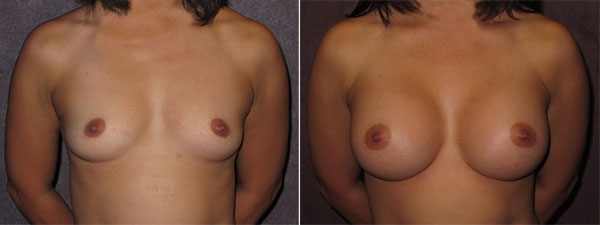
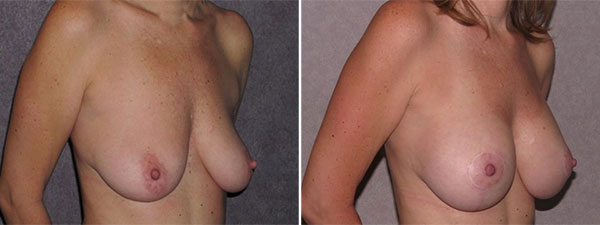
Depending on your anatomy, lifestyle, and goals, breast implants can be placed above the muscle (subglandular) or under the muscle (submuscular).
Subglandular Placement
With subglandular placement, the breast implant is placed behind the skin and breast tissue and above the pectoralis major muscle. Breast implants with subglandular placement may have a more rounded appearance. Since the implants are located close to the breast tissue, rippling may be more easily visible, and there is an increased risk for complications such as capsular contracture and bottoming out with subglandular placement.
Benefits of subglandular placement:
- Shorter recovery submuscular since the muscles are not cut
- Results of the size and shape of the breast implants are visualized sooner
Submuscular Placement
With submuscular placement, the breast implant is placed below the pectoralis major muscle.
Benefits of submuscular placement:
- Provides a more natural breast appearance
- Lower risk of visible rippling
- Lower risk of capsular contracture and bottoming out
Dr. Patronella uses submuscular placement as part of his True Form Breast Augmentation®.
What are My Breast Augmentation Incision Options?
There are four incision locations, described below.
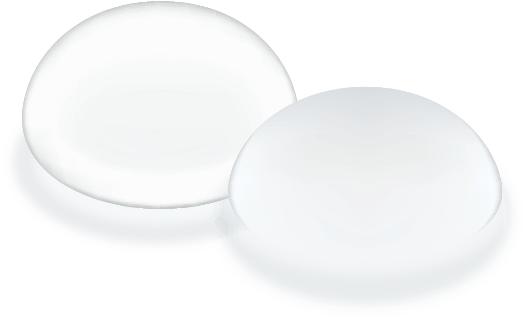
The inframammary incision, which is the incision Dr. Patronella uses to perform breast augmentation, is the most popular incision location for breast augmentation in the United States. Incisions are made in the crease under the breasts. This incision location provides the surgeon with the most access when placing the breast implants and is ideal for silicone or saline implants. The scars in the inframammary fold are easily hidden under clothing.
Dr. Patronella uses the inframammary incision for his True Form Breast Augmentation®.
Dr. Patronella uses small, approximately one-inch incisions placed in the lower crease of the breasts to hide scarring and improve the appearance of your breasts. The incision type can vary depending on the size and type of your breast implants, with very large silicone implants sometimes requiring a larger incision.
Periareolar Incision
An incision is made around the lower half of the aeolar (colored skin around the nipple), which hides the scar. This incision location is often used when a breast augmentation is combined with a breast lift.
Transaxillary Incision
An incision is made in each armpit, and the surgeon dissects a tunnel through which the implants will be placed. Only saline implants can be used with the transaxillary incision location.
There is no scar on the breast with this incision location; however, there is a higher risk for asymmetry of the implants.
Trans-Umbilical Breast Augmentation (Tuba) Incision
An incision is made in the navel (belly button), and the surgeon dissects a tunnel upward through which the implants will be placed. Only saline implants can be used with the TUBA incision location. Although there is no visible scar, this location has a high risk for asymmetry of the breast implants.