Posted November 23, 2026 in Facelift
6 minute read
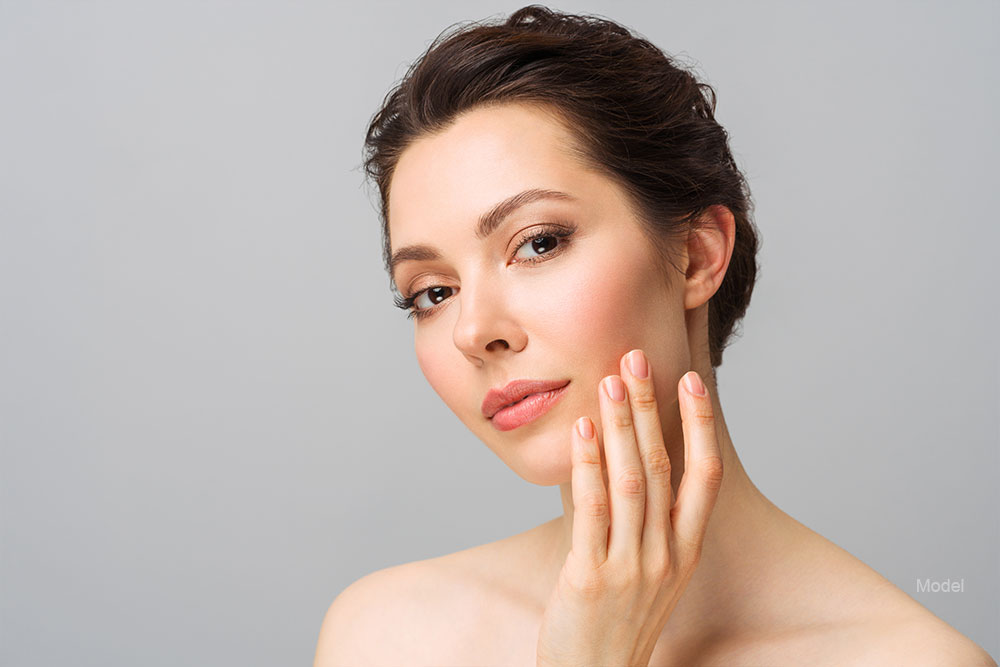
You’ve probably noticed that facial aging doesn’t happen everywhere at once. You might realize your cheeks look a little flatter, your jawline has lost its definition, or deeper creases are forming around your mouth.
Eventually, these combined changes can make your face look older or more tired than you actually feel. While skincare products and injectable treatments can help up to a certain point, they can’t fully address sagging facial tissues.
A facelift targets several of these changes at once, giving you smoother contours and restoring a more youthful appearance. In this blog, we’ll explore which areas of your face are treated during facelift surgery so that you know what to expect from your surgery and results.
What Is Facelift Surgery?
A facelift, medically known as a rhytidectomy, is a plastic surgery procedure that lifts and repositions sagging facial tissues, tightens sagging skin, and restores youthful definition to areas affected by the aging process. Unlike non-surgical treatments that primarily address surface wrinkles, a facelift targets the underlying structures responsible for facial sagging. Different facelift techniques include a mini facelift for the lower face and jawline and a deep plane facelift for the underlying muscles and deeper tissues.
Dr. Christopher Patronella has advanced the traditional facelift, offering patients his signature True Form Facelift®, which uses a dual-plane technique to address both the skin and the deeper superficial musculoaponeurotic system (SMAS) layer. By repositioning these tissues rather than simply pulling the skin tighter, Dr. Patronella creates natural-looking results that preserve your unique facial features.
What Areas Does a Facelift Correct?
Many people don’t know that a facelift doesn’t address your entire face. Instead, it targets the middle and lower portions of your face, where changes in skin elasticity, facial fat distribution, and underlying tissue support become increasingly noticeable with age.
These may include:
Cheeks and Midface
One of the earliest signs of aging in your face is a loss of fullness in your cheeks. Your facial fat shifts downward, and the underlying tissues begin to sag, making your cheeks appear flatter or less defined.
A facelift lifts and repositions the skin in this area, helping restore more youthful cheek contours. Dr. Patronella’s True Form Facelift® also repositions facial fat pads to improve volume distribution and create smoother transitions between your facial features. If you have significant volume loss in your cheeks and midface, Dr. Patronella may recommend facial fat grafting to restore fullness.
Nasolabial Folds
Nasolabial folds are the creases that extend from the sides of your nose to the corners of your mouth. While everyone has these natural facial folds, they often become more pronounced as your skin and other facial tissues change with age. By lifting the midface and repositioning sagging tissues, a facelift can soften the appearance of those deep nasolabial folds.
However, facelift surgery doesn’t necessarily eliminate these creases completely. Depending on their depth and how much facial volume you’ve lost, Dr. Patronella may recommend fat grafting or dermal fillers to further improve their appearance.
Marionette Lines
Marionette lines are the vertical creases that extend downward from the corners of your mouth toward your chin. As these lines deepen, they can cause the corners of your mouth to turn down, making you appear tired or unhappy even when you’re not.
A facelift can improve marionette lines by lifting those fallen facial tissues and reducing the sagging that contributes to these creases. If necessary, additional volume restoration (using fat grafting or dermal fillers) can help soften any remaining lines and give you a smoother, more refreshed appearance around your mouth.
Jawline and Jowls
Your jawline is one of the areas where the effects of facial aging can become especially noticeable. As your facial skin loses elasticity and the deeper facial tissues descend, excess skin and fat accumulate along your lower jaw, creating jowls. Jowls can blur the previously sharp distinction between your face and neck and make your lower face appear heavier.
A facelift repositions these sagging tissues and removes excess skin to reduce jowls and restore a smoother, more defined jawline. Dr. Patronella’s dual-plane technique lifts and tightens your deeper facial structures (instead of simply pulling the skin back), helping create a more natural-looking jawline contour without leaving you with an overly stretched appearance.
Chin and Upper Neck
Although the primary focus of a facelift is your middle and lower face, the area under your chin and the transition into your neck also influence your overall facial appearance.
Loose skin, sagging tissues, and reduced jawline definition can make this area appear heavier or less sculpted. A facelift can help improve the transition between your chin and jawline; however, more significant neck aging often requires a dedicated neck lift or neck surgery.
Dr. Patronella frequently combines his True Form Facelift® with neck lift surgery to address drooping skin around the neck, facial muscle laxity, and visible neck bands. Treating these areas together gives you a smoother, more balanced appearance from your cheeks to your neck.
What Areas of the Face Does Facial Plastic Surgery Not Treat?
While a facelift can significantly improve your middle and lower face, it doesn’t address every sign of facial aging. For example, a traditional facelift generally won’t correct drooping eyebrows, forehead wrinkles, sagging upper eyelids, or under-eye bags.
To address these concerns, Dr. Patronella may recommend combining your facelift with additional cosmetic surgical procedures, such as a brow lift, blepharoplasty (eyelid surgery), facial fat grafting, dermal fillers, or Halo™ laser skin resurfacing.
Keep in mind that combining procedures isn’t necessary for everyone. Dr. Patronella’s goal is to address the facial aging changes that bother you while maintaining your natural, beautiful facial proportions.
Schedule Your Facelift Consultation With Dr. Patronella in Houston, TX
A facelift isn’t about changing the way you look. It’s about restoring the contours and definition that have gradually changed over time. To learn more about your facelift options and his True Form Facelift®, schedule a consultation with board-certified plastic surgeon and facial rejuvenation expert Dr. Christopher Patronella.
He will personalize your facelift procedure, addressing sagging, volume changes, and facial proportions while preserving what makes your appearance uniquely yours. To make an appointment, call our office today at (713) 575-1996 or complete our online contact form.